Alina Store
Our Brands
A curated edit of European brands in tableware, cookware, serving pieces, and home accessories. Each house is selected for craftsmanship, character, and lasting design.
Italy

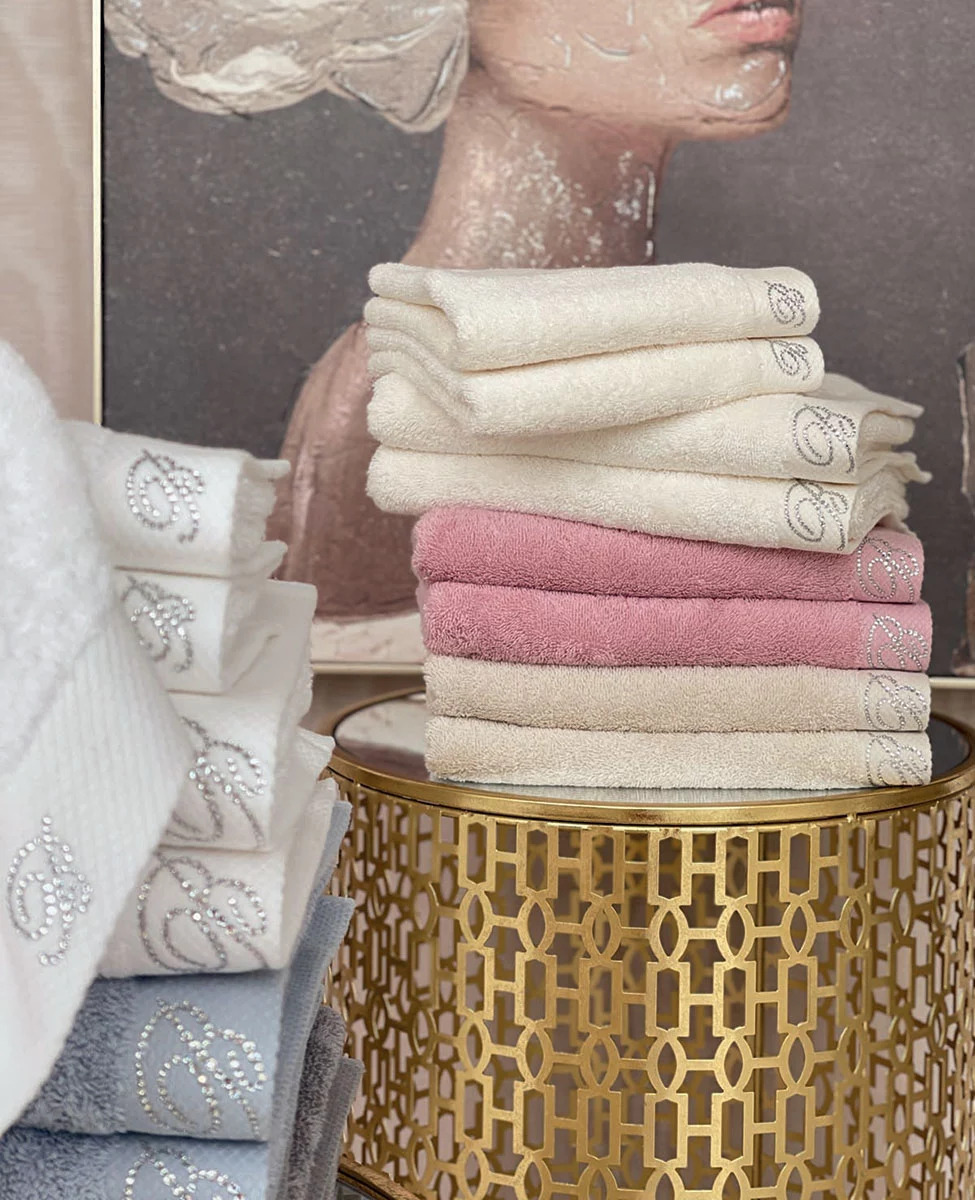
Blumarine was founded in 1977 in Carpi by Anna Molinari and Gianpaolo Tarabini, who named it after their love of blue and the sea. Molinari has been called the ‘queen of roses’, and romantic femininity remains the Blumarine signature, including in its home collection.
View Collection →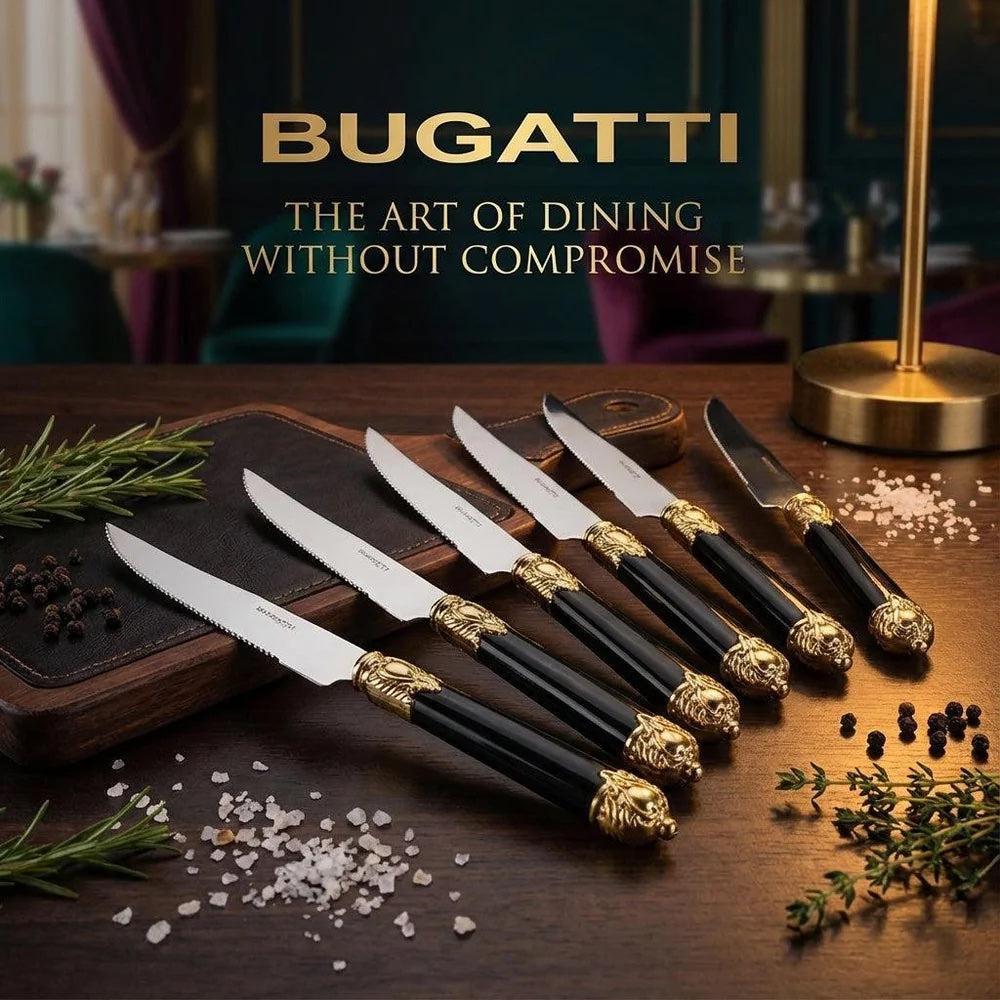
Italy

Casa Bugatti was founded in 1923 by the five Bugatti brothers in Lumezzane, near Brescia. They were the first in Italy to die-cast cutlery, and in 1928 invented the brass-silicon alloy still known as the Bugatti alloy.
View Collection →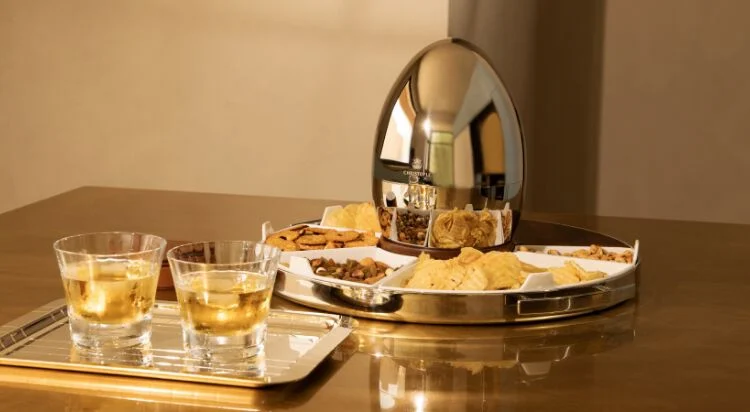
France

Founded in Paris in 1830 by the jeweller Charles Christofle, the house turned to silver in 1842, when he acquired the patents for silver and gold electroplating. Commissions for Napoleon III followed, and Christofle became a supplier to royal courts across Europe.
View Collection →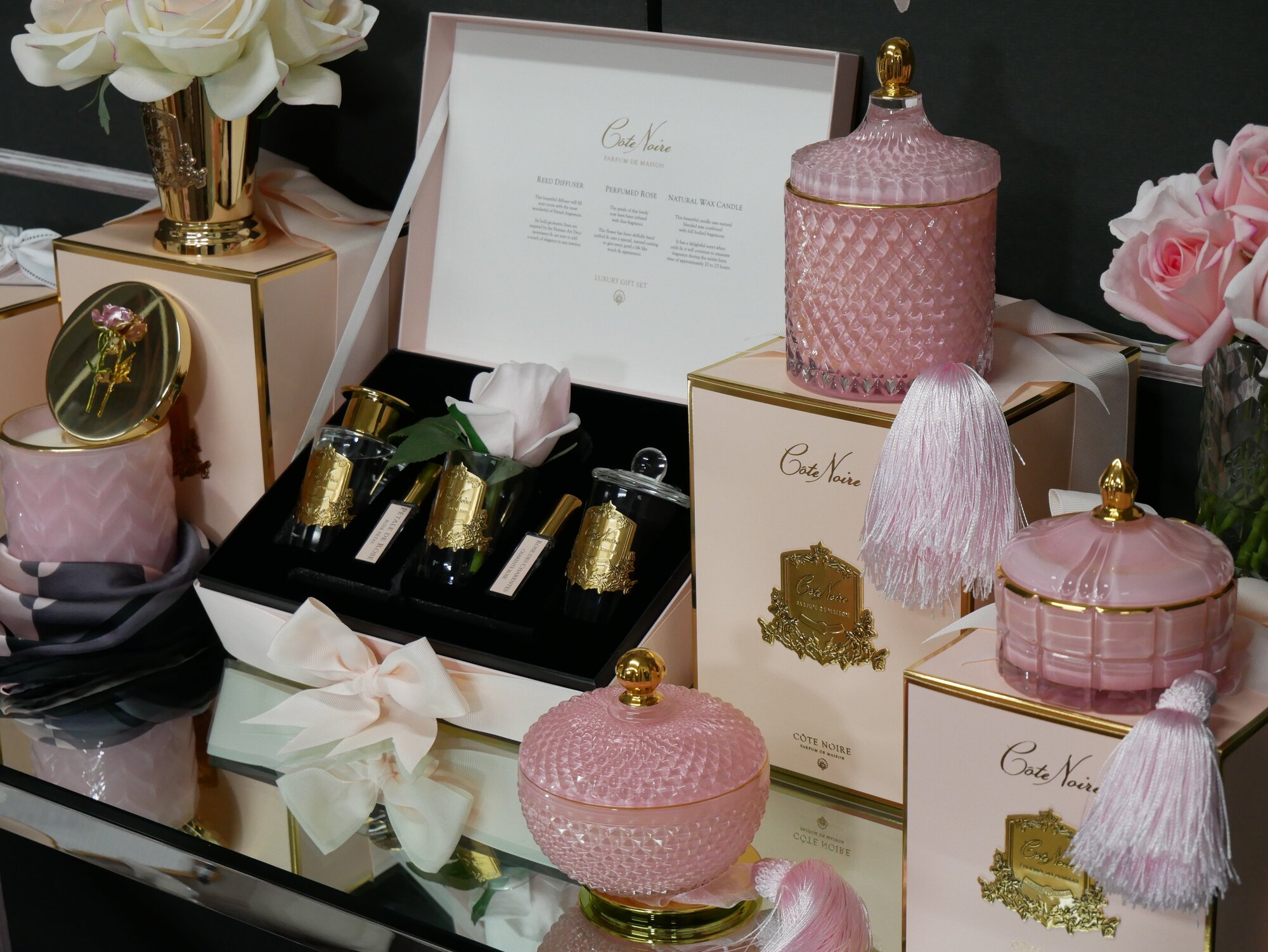
France

Côte Noire is a house of home fragrance whose scents are composed by French perfumers, among them Caroline Mallêjac, the author of Queen of the Night, Mélanie Carestia and Emmanuelle Juilliard. The collection draws on the Charente countryside and French life at home. Its candles are hand-poured from a paraffin-free blend of soy, coconut and beeswax in black or white glass with a gold crest, and are packed in recycled cardboard, foam and glass.
View Collection →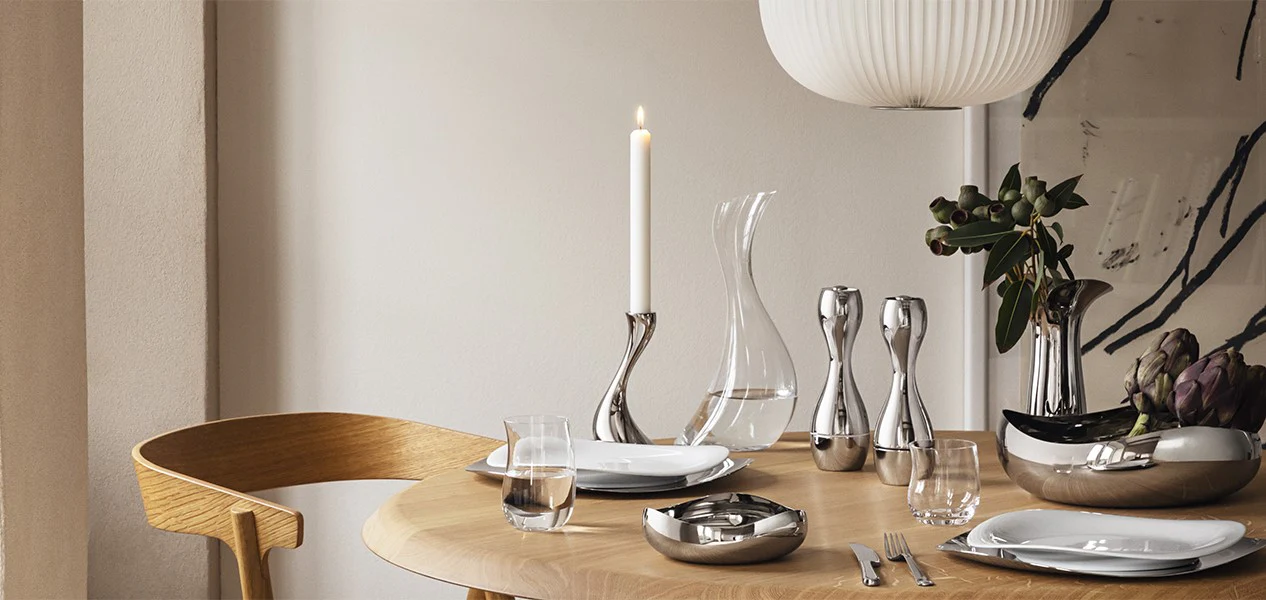
Denmark
Silversmith Georg Jensen opened his workshop on Bredgade in Copenhagen in 1904. The Danish house became known for sculptural silver and later for designers such as Henning Koppel and Sigvard Bernadotte, whose geometric style became a new Georg Jensen classic.
View Collection →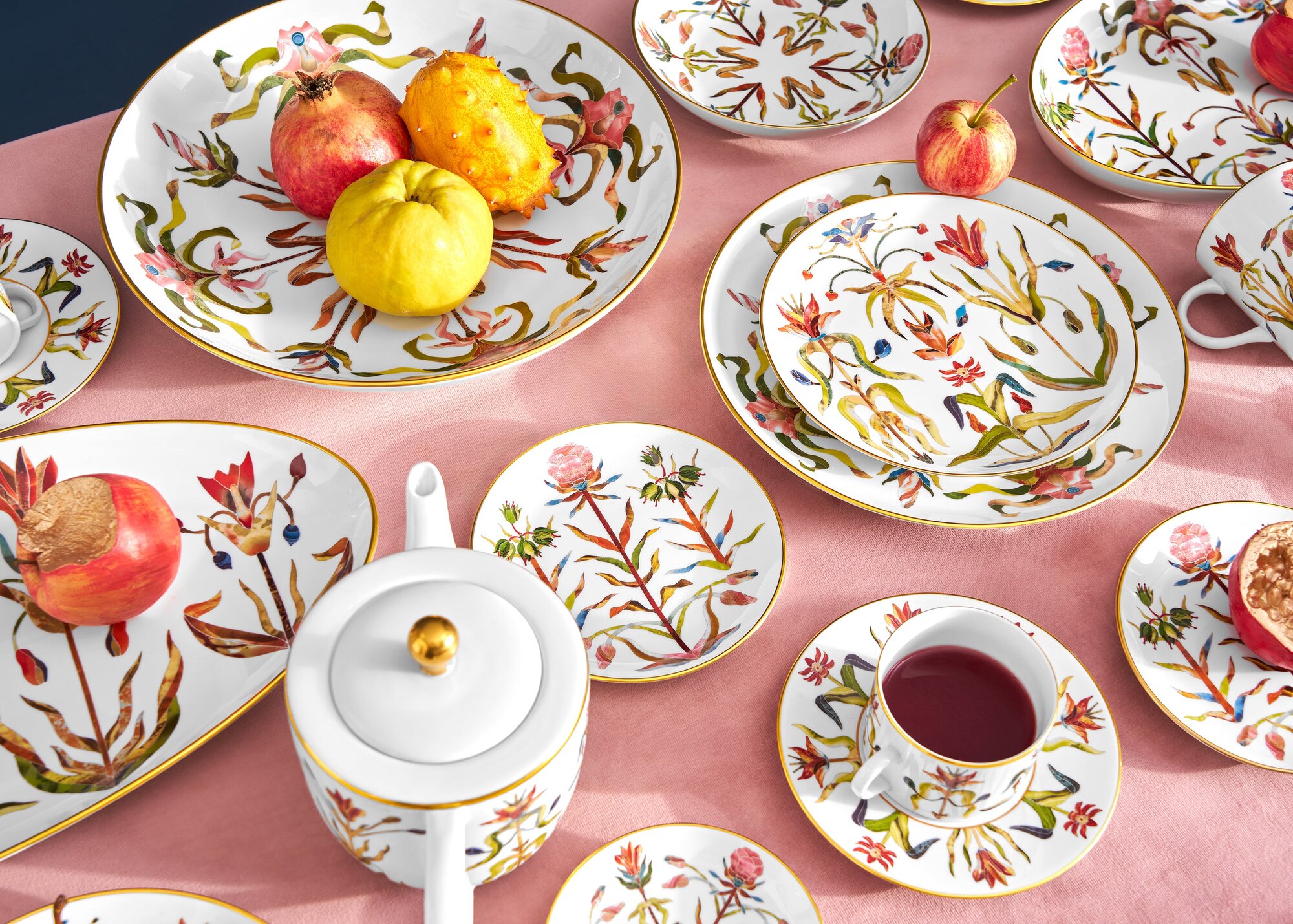
United States

L'Objet was founded in 2005 by interior designer Elad Yifrach. The house is based in New York, and its porcelain is made in its own atelier in Portugal: pieces are shaped by hand as they dry and gilded in three layers of 24-carat gold. Its collaborations include Fortuny and the Haas Brothers.
View Collection →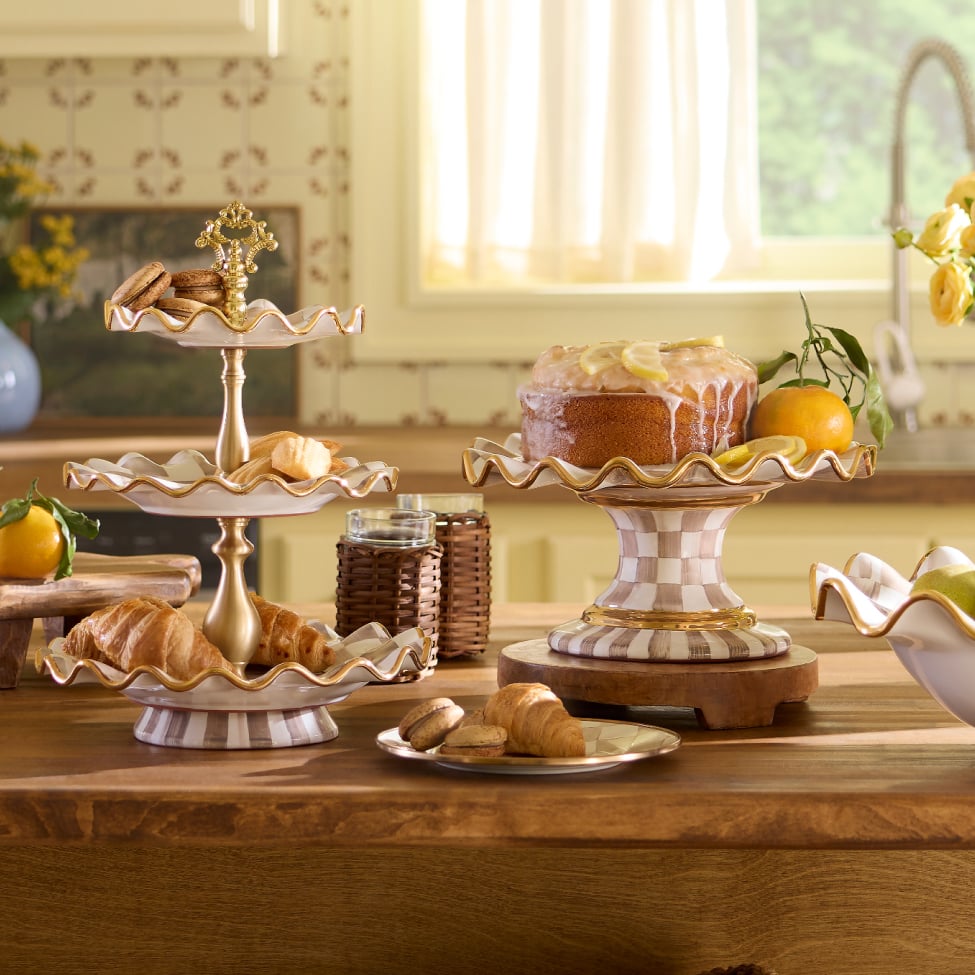
United States

MacKenzie-Childs was founded in 1983 by ceramicists Victoria and Richard MacKenzie-Childs in Aurora, New York. On a Victorian farm overlooking Cayuga Lake, its artisans still hand-paint the house signature, Courtly Check.
View Collection →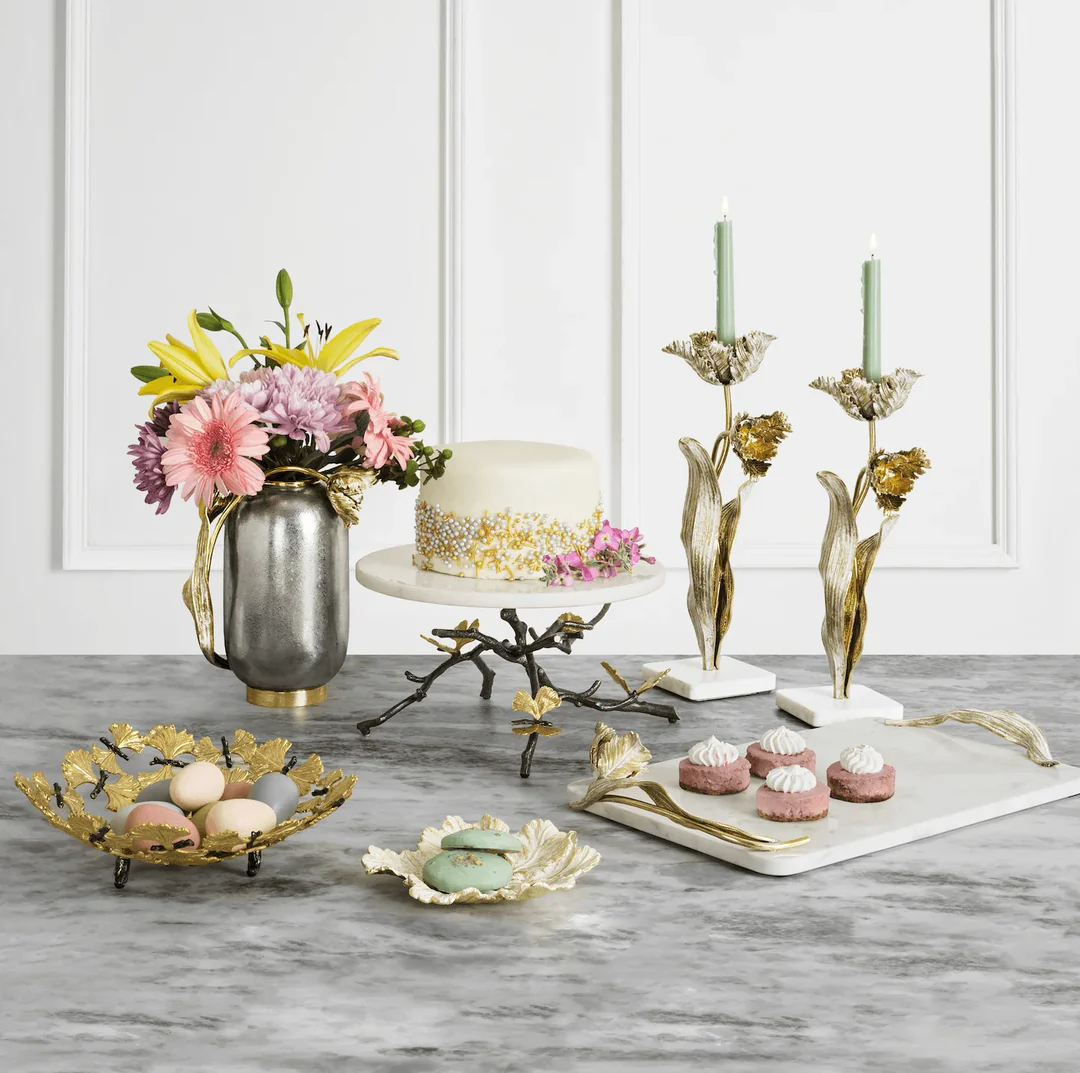
USA

American artist Michael Aram travelled to India in 1989 and discovered its rich metalworking traditions. He set up a workshop in New Delhi, where artisans handcraft his nature-inspired sculptural pieces for the home.
View Collection →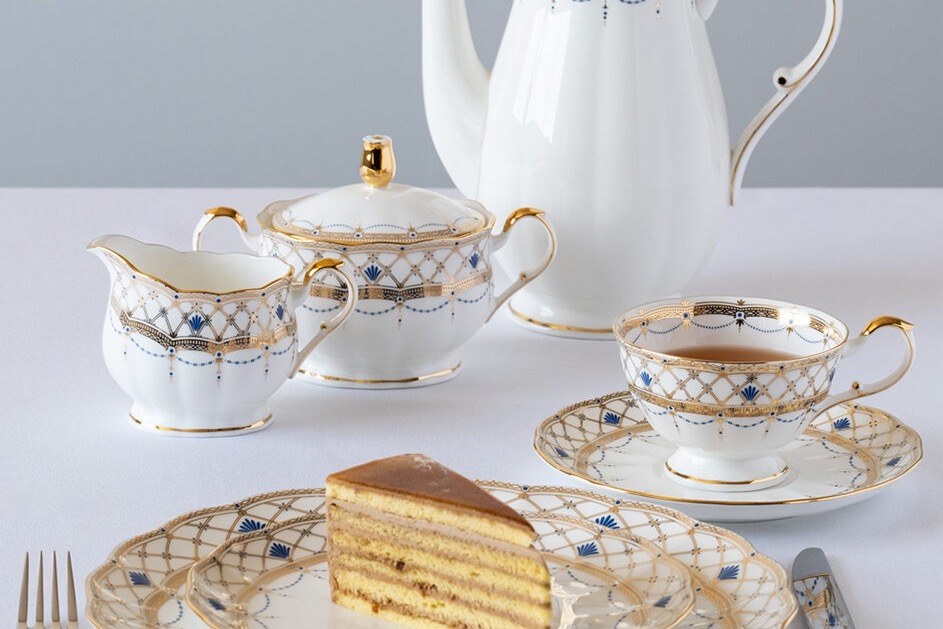
Japan
Narumi was founded in post-war Japan in 1946, in the remains of a porcelain factory. In 1965 it became the first company in Japan to mass-produce bone china, then made by only a handful of European manufacturers.
View Collection →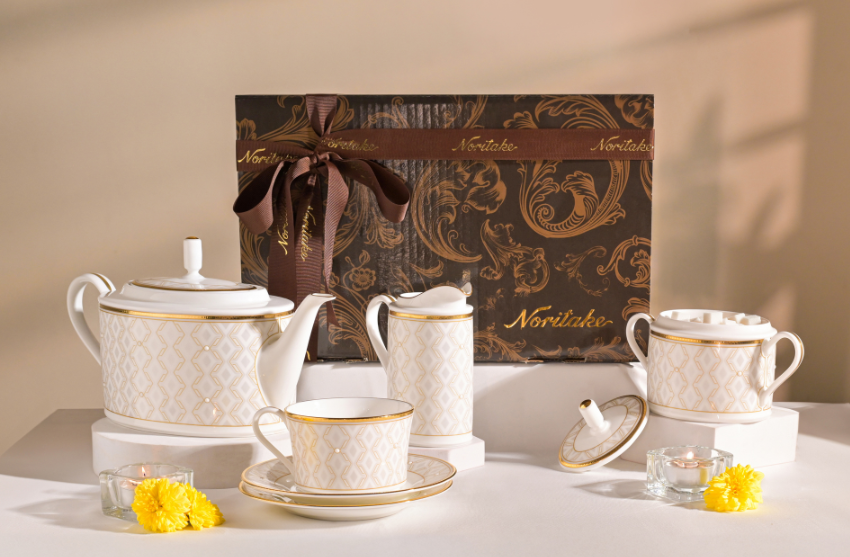
Japan

Noritake was founded in 1904 in the village of Noritake near Nagoya, where Ichizaemon Morimura built a factory to make fine porcelain for the American market. The house went on to create Japan’s first Western-style dinnerware set.
View Collection →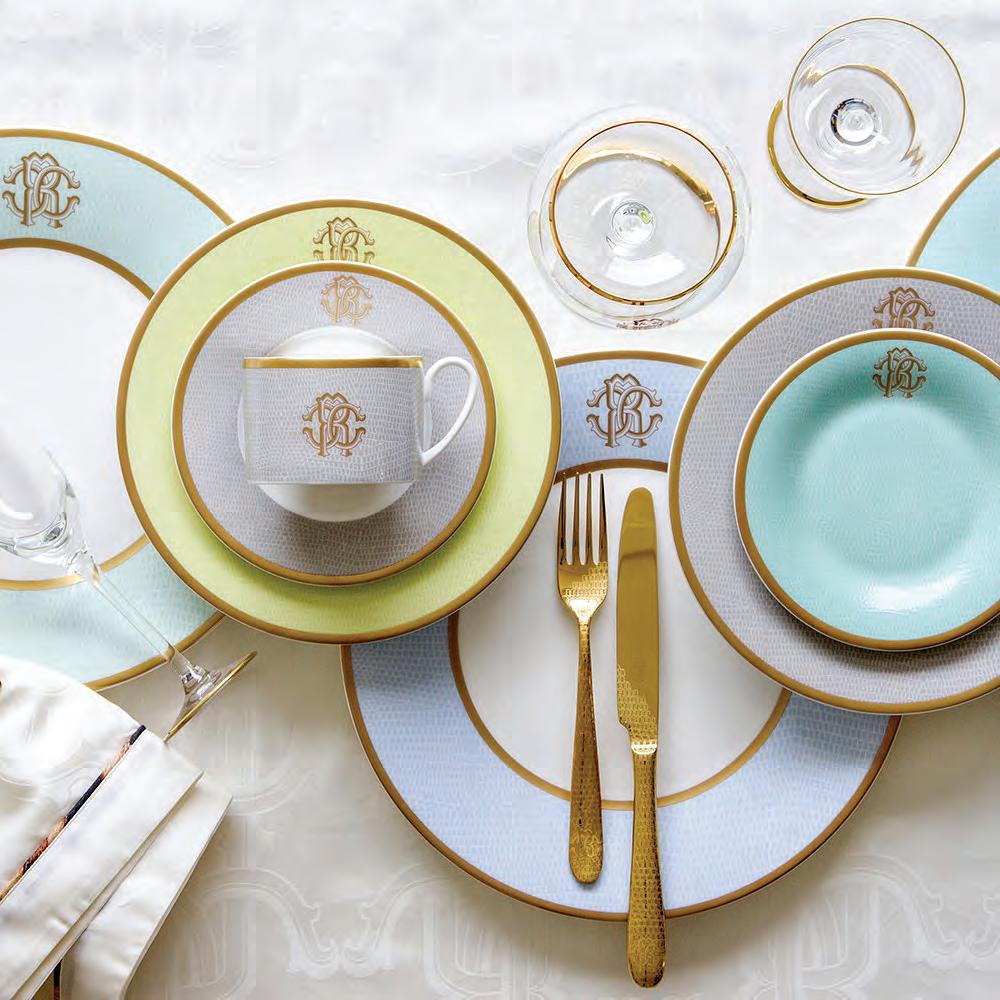
Italy

Florence-born Roberto Cavalli showed his first collection in 1970 and soon patented his own technique for printing on leather. Animal prints became the house hallmark after his breakthrough 1994 show — a bold aesthetic that has since moved into interiors and the table.
View Collection →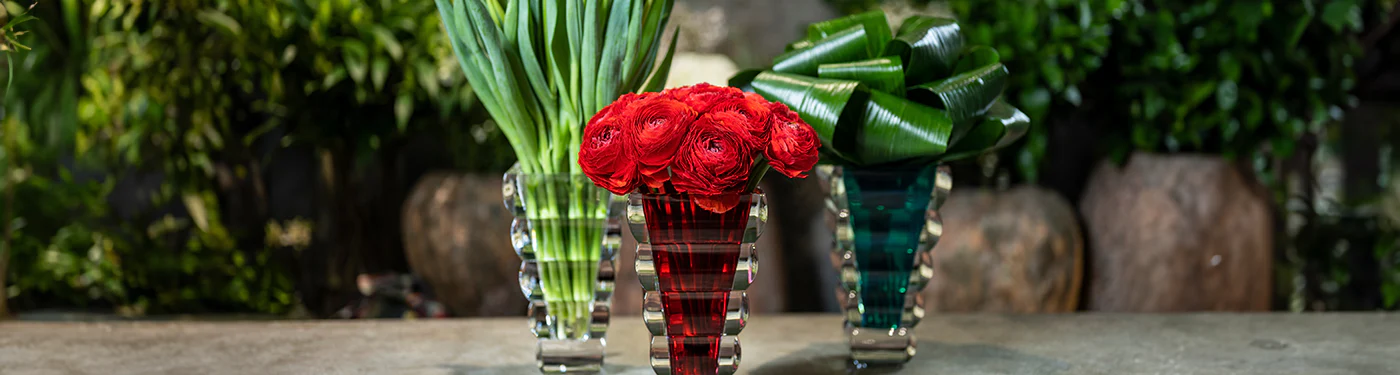
Slovenia
Glass has been made in Rogaška, in eastern Slovenia, since 1665, and the Rogaška crystal works has operated since 1927. Its handmade crystal has been given to kings and queens, heads of state and stars of sport and culture.
View Collection →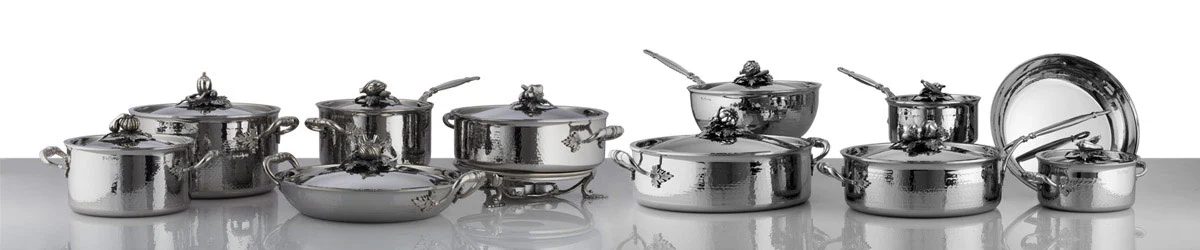
Italy

In 1931 Antonio Ruffoni made his first copper pan. Four generations later, the family still crafts its cookware in Omegna, in northern Piedmont, where every piece is shaped, polished and hammered by hand.
View Collection →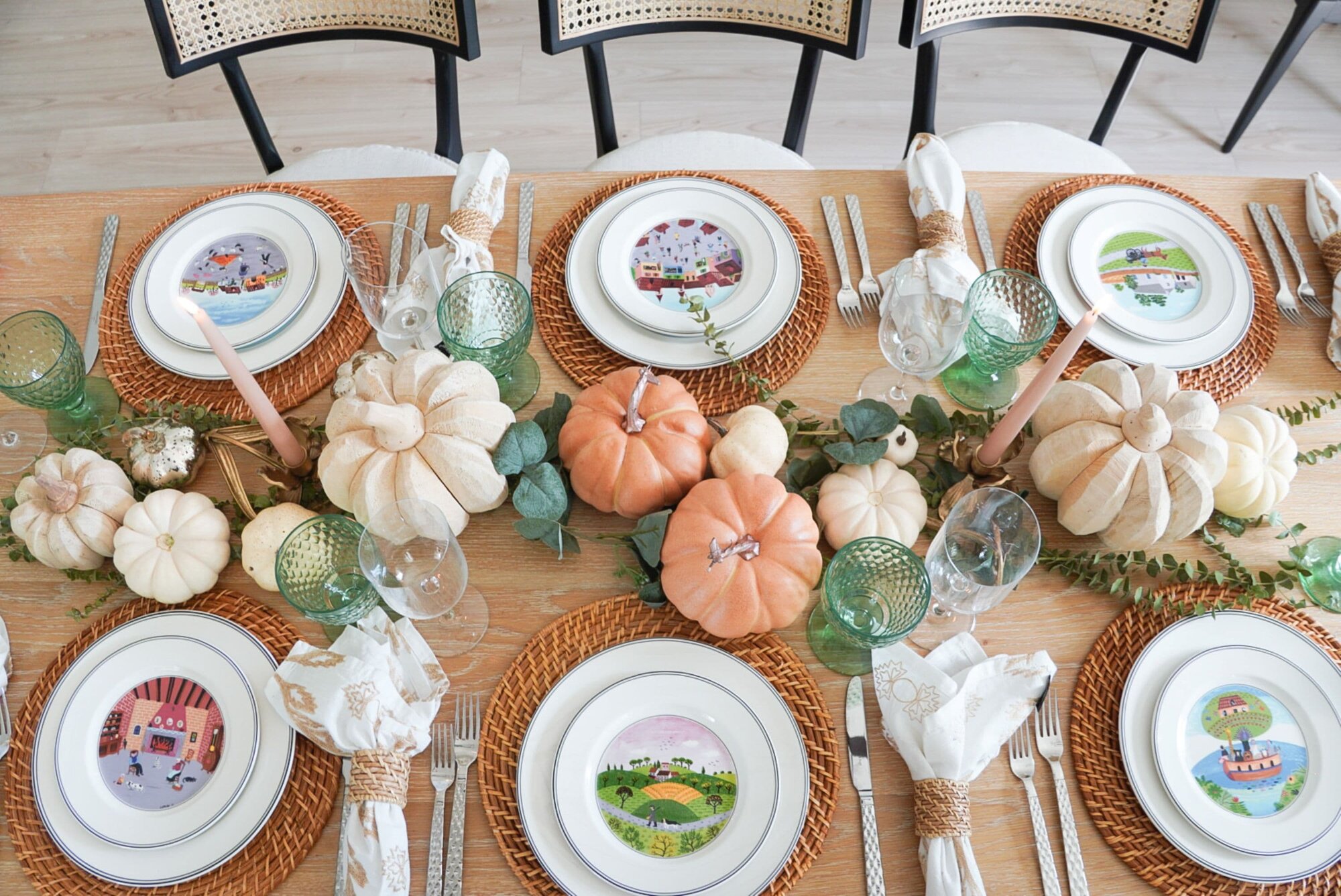
Germany

The story of Villeroy & Boch begins in 1748, when the iron founder François Boch and his three sons began making ceramics in Audun-le-Tiche in Lorraine. In 1836 the Boch family joined forces with the manufacturer Nicolas Villeroy. The company is still headquartered in a former Benedictine abbey in Mettlach, and its Alt Luxemburg pattern, which goes back to a design of 1770, is made to this day.
View Collection →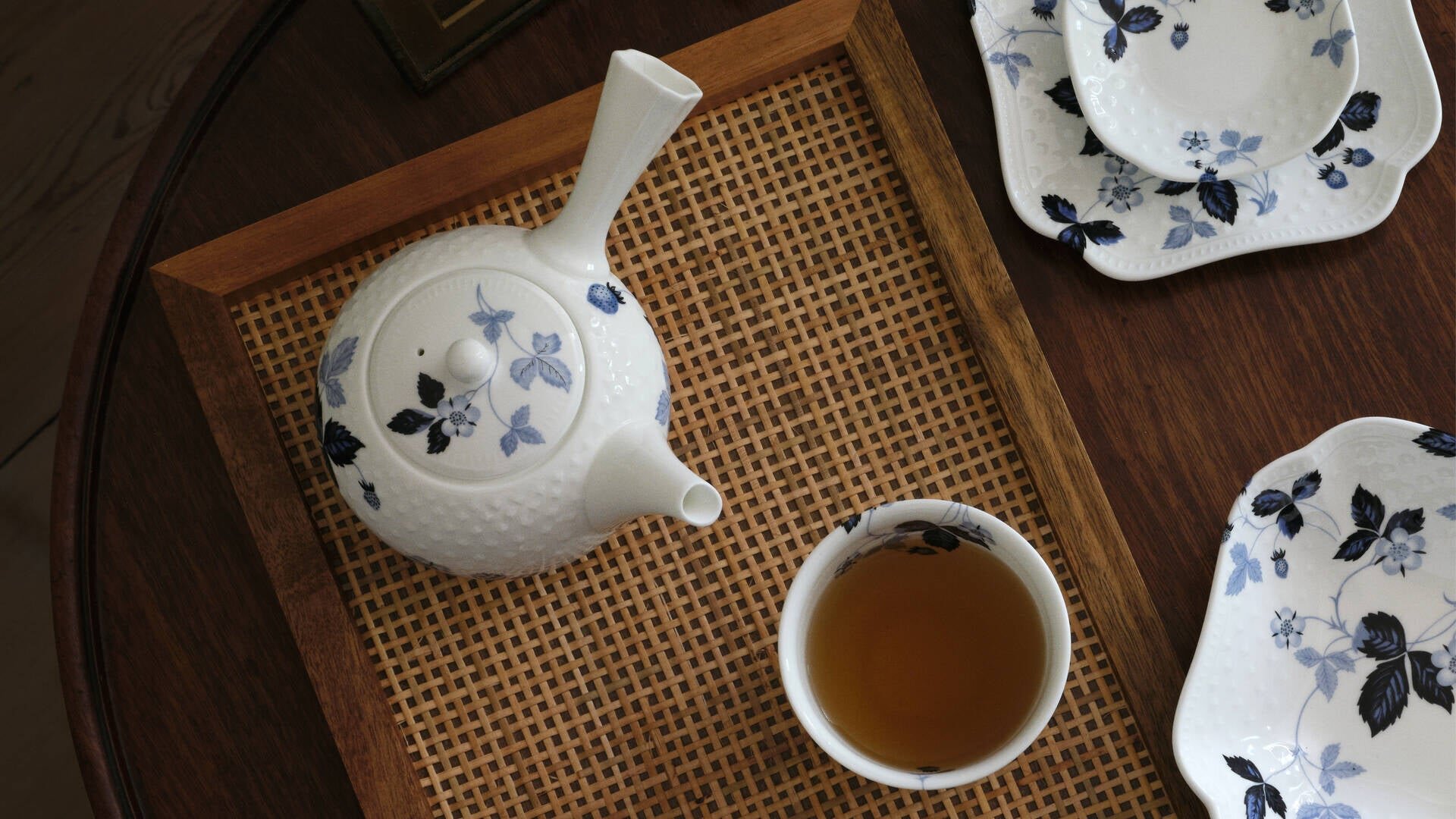
United Kingdom

Josiah Wedgwood founded the company in 1759 in Stoke-on-Trent, the heart of the English Potteries. Here he created Queen's Ware, the cream-coloured earthenware named for Queen Charlotte, and Jasperware — matt stoneware with white reliefs, perfected in 1774 after thousands of trials and still made by hand in England.
View Collection →